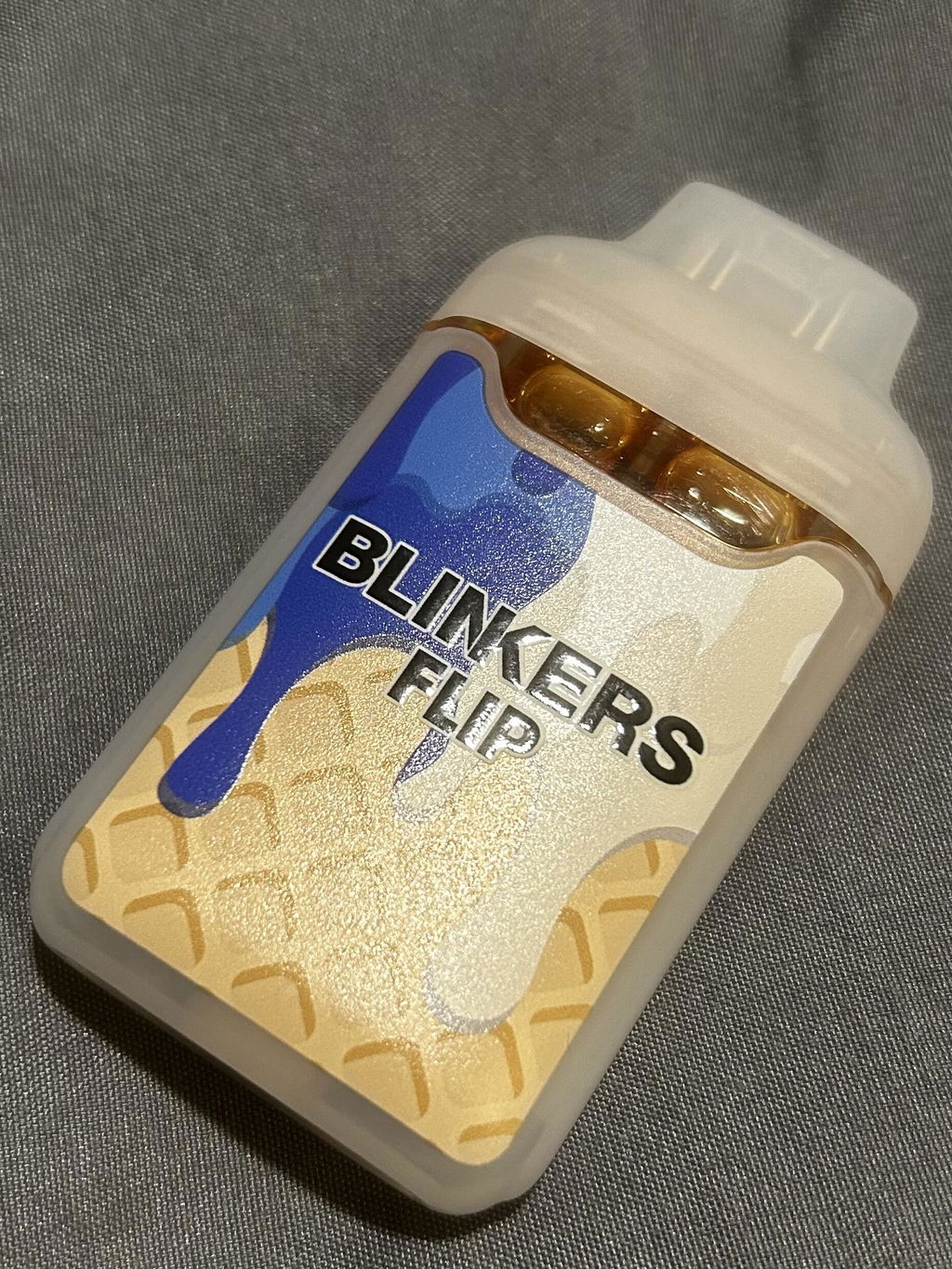
Some cannabinoids are grown. Others are built.
THCA is the first kind — the plant makes it on its own, in the flower, while it's still alive. Delta-8, HHC, THC-O and most of the alphabet-soup cannabinoids on gas station shelves are the second kind: they start as CBD extracted from hemp, then get converted into something else in a lab using acid and solvent. Both end up in products labeled “hemp.” They are not the same thing, and starting November 12, 2026, federal law stops treating them the same way.
Here's what's actually happening at the chemistry level, why the distinction is about to matter a lot more, and how to tell which one you're holding.
The short version
Naturally occurring cannabinoids are produced by the cannabis plant itself. THCA, CBDA, CBGA and the compounds they turn into are all built by the plant from the same starting molecule. You get them by growing flower and extracting what's already there.
Converted cannabinoids — also called semi-synthetic, isomerized, or lab-converted — don't exist in meaningful quantities in any plant. They're made by taking cheap CBD and chemically rearranging it. Delta-8 THC, delta-10, HHC, THC-O acetate and THCjd all come from this process.
The word “hemp-derived” covers both, which is exactly why it stopped being a useful word.
How the plant does it
The cannabis plant doesn't make THC. It makes THCA — tetrahydrocannabinolic acid — and it makes it enzymatically, one molecule at a time, inside the trichome heads on the flower.
It starts with CBGA, sometimes called the mother cannabinoid. Enzymes in the plant convert CBGA down one of three branches: into THCA, into CBDA, or into CBCA. Which branch dominates is genetics. A high-THCA cultivar is one whose enzymes push most of the available CBGA toward THCA. We walked through this whole pathway in The Cannabinoid Family Tree, Explained.
That THCA sits in the flower unchanged until heat is applied. Light a joint or hit a vape and the acid group falls off — that's decarboxylation — leaving delta-9 THC. No lab, no reagents. The conversion happens in the bowl.
The important part: every step of that process happened either inside a living plant or inside your lighter's flame. Nothing was synthesized.
How the lab does it
Converted cannabinoids exist because of an economics problem. Around 2019, the hemp industry had planted far more CBD acreage than the market could absorb. CBD isolate crashed to a few dollars a kilo. Meanwhile, intoxicating products sold well.
Chemists had a known solution. CBD and THC are isomers — same atoms, different arrangement. Dissolve CBD in a solvent, add an acid catalyst, apply heat, and the molecule closes a ring and rearranges into delta-8 or delta-9 THC. Vary the conditions and you can push it toward delta-10 or, with hydrogen gas and a metal catalyst, toward HHC. Add acetic anhydride and you get THC-O acetate, a compound that has never been found in any cannabis plant.
The reaction itself is routine organic chemistry. The problems are downstream:
Reaction byproducts
Isomerization is never clean. Alongside your target cannabinoid you get a mix of unintended isomers and reaction products, some of which have never been characterized, let alone studied for inhalation safety. A standard potency panel won't show them, because the lab is only looking for the cannabinoids on its list.
Residual catalysts and solvents
Acid catalysts and the solvents used to run and quench the reaction have to be removed. Whether they actually were is a question only a full residual solvent and heavy metals panel can answer — which is one of the reasons we keep pointing people at how to read a COA rather than trusting a potency number on a box.
No agricultural trace
With flower, you can trace the product back to a harvest, a cultivar, a grow environment. With a converted distillate, you're trusting a chemist you'll never meet. There's no equivalent of looking at the bud and forming your own judgment.
None of this means every converted product is dangerous. It means the quality floor is set entirely by the processor's discipline, and you have fewer ways to check it.
What changes on November 12, 2026
This distinction used to be a preference. It's about to be a legal line.
The 2018 Farm Bill defined hemp by a single number: delta-9 THC at or below 0.3% by dry weight. It said nothing about how a cannabinoid got made. That silence is what the delta-8 market was built in. We covered the original framework in The 2018 Farm Bill, in Plain English.
The continuing resolution signed in late 2025 rewrote the definition. Two separate changes, on two separate dates:
November 12, 2026 — products containing cannabinoids that aren't capable of being naturally produced by a cannabis plant are excluded from the federal definition of hemp. This is the synthetic-conversion provision, and Congress left its date alone when it delayed the rest of the law. Delta-8, delta-10, HHC and THC-O are the clear targets.
December 11, 2026 — the shift to a “total THC” standard that counts THCA toward the 0.3% limit, plus a cap on total THC per finished container. This is the piece that was pushed back from November by legislation signed on September 2, 2026.
So the two halves of the hemp market come apart on two different days, about a month apart. Naturally occurring cannabinoids get until December. Lab-converted ones don't. If you want the full timeline and what it means for shopping, that's covered in The November 2026 Hemp Deadline: A Shopper's FAQ and the plain-English breakdown of the new federal total THC rule.
State law is a separate layer on top of all this, and several states banned converted cannabinoids years ahead of the federal government.
Reading a label
There's no required disclosure that says “this was made by isomerization.” But the signals are consistent.
Look at the cannabinoid name. THCA, CBD, CBG, CBN and delta-9 THC all occur in the plant. CBN is a slight exception — it forms from THC degrading over time, which can happen in a jar or in a reactor. Delta-8, delta-10, HHC, THC-O, THCjd, THC-B and most hyphenated names you don't recognize are conversion products.
Look at what the product is. Flower is flower — the cannabinoids in THCA flower grew there. Distillate vapes, gummies and tinctures can go either way, and the COA is the only way to know.
Look at the COA's scope. A potency-only panel tells you how much of the named cannabinoid is present. It tells you nothing about what else came along. For anything converted, you want residual solvents and heavy metals on the same certificate.
Be skeptical of very high numbers on novel cannabinoids. A cannabinoid that the plant makes in trace amounts, sold at high concentration, got there somehow.
Where this leaves you
If your interest is in what the plant actually produces, the answer has been the same the whole time: flower, tested, from a source that shows its work. The conversion market grew out of a CBD oversupply and a gap in a 2018 statute. Both of those conditions are ending.
If you buy converted products, the practical move before November is to know which of the things on your shelf are which, and to plan around the date rather than be surprised by it. If you buy flower, the date that matters to you is December 11 — different deadline, different rule.
Either way, the useful habit is the same one we keep coming back to: read the certificate, not the box.
Chubby Smoke products are lab-tested and intended for adults 21+. This article is educational and is not legal or medical advice. These statements have not been evaluated by the FDA.