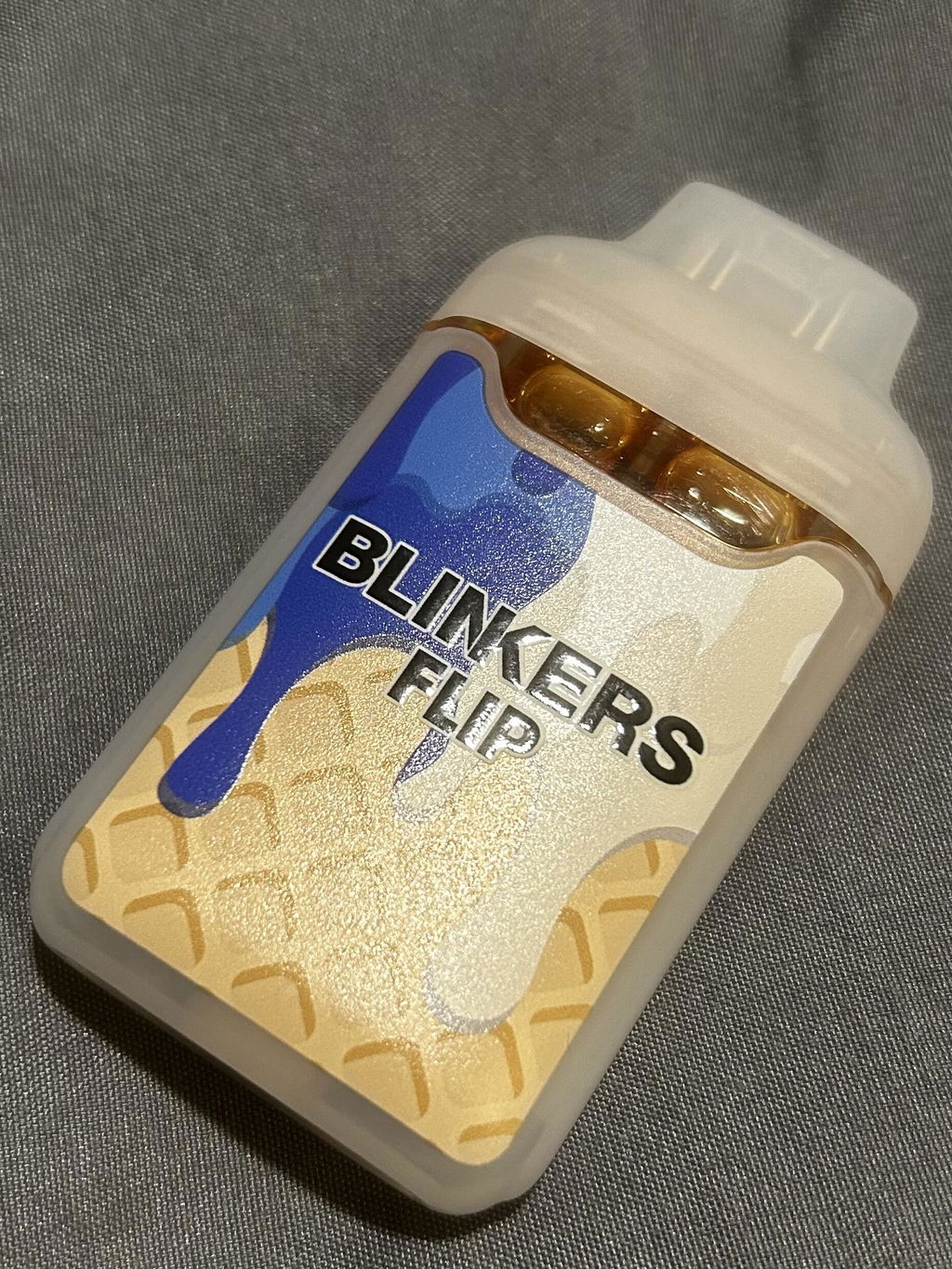
Short answer: a THCA disposable is a sealed battery, a heating coil, and a reservoir of cannabis extract. Almost every problem people have with them — clogging, weak hits, burnt taste, a device that dies with oil still in it — traces back to two things: the oil is thick and temperature-sensitive, and the airflow path is narrow. Warm it up, pull gently, store it upright, and most of those problems don't happen.
Disposables are the most convenient format we sell and the one people ask the most questions about. Here's what's actually going on inside one.
What's Inside a Disposable
Four parts, and that's it:
- A reservoir holding somewhere between 0.5g and 3g of cannabis extract.
- A coil — usually a ceramic or quartz heating element with a wick — that sits in contact with the oil.
- A battery, in most modern units rechargeable via USB-C even though the device itself is disposable.
- An airflow sensor that fires the coil when you inhale, or a button on some models.
When you pull, the sensor triggers the coil, the coil heats the oil in the wick to vapor temperature, and you inhale the vapor. There's no combustion — this is the same principle we covered in the science of vaporization versus combustion, just applied to extract instead of flower.
What's in the Oil Matters More Than the Hardware
This is where the real quality difference lives. "THCA vape" is a category label, not a recipe. What's in the tank varies enormously.
- Distillate is stripped down to near-pure cannabinoid, then usually has terpenes added back. Thin, clear, potent, and flavor depends entirely on what was reintroduced.
- Live resin is extracted from fresh-frozen plant material, keeping much more of the original terpene profile. Thicker, darker, and far more expressive in flavor.
- Live rosin is solventless — pressed with heat and pressure rather than extracted with a solvent. The premium option, and it behaves differently in a cart because of its consistency.
We put all three side by side in live resin vs. live rosin vs. distillate. If a disposable's product page doesn't tell you which one is in the tank, that's a meaningful gap.
Also worth knowing: a cart labeled THCA still works the same way. The THCA converts to delta-9 THC when the coil heats it, exactly as it would in a bowl — that's the decarboxylation step, just happening in a device instead of a flame.
Why Disposables Clog
Cannabis extract is viscous. At room temperature live resin has roughly the consistency of cold honey; below about 15°C it thickens further and can partially seize up. The airflow channel in a disposable is a narrow tube running through the middle of the device. Two failure modes follow from that:
Cold oil won't move. If the device has been in a car, a jacket pocket in winter, or a cold room, the oil is too thick to wick into the coil properly. You pull, the sensor fires, and almost nothing comes out.
Condensation builds up in the mouthpiece. Vapor that doesn't make it into your lungs recondenses on the cooler surfaces of the mouthpiece and airway. Over dozens of pulls that residue accumulates, mixes with oil, and hardens into a plug.
A third, less common cause: pulling too hard. A hard drag drags unvaporized oil up into the airway faster than the coil can vaporize it, which is the fastest way to create a clog in a device that didn't have one.
Fixing a Clogged or Weak Disposable
Work through these in order. Most clogs clear at step one or two.
1. Warm it in your hand. Hold the device in a closed fist for two to three minutes. Body heat is usually enough to thin the oil. This solves the majority of "it stopped hitting" complaints, especially in cold weather.
2. Take a slow, gentle pull. Two to three seconds, light suction. You're testing whether the sensor fires and whether the oil flows — not trying to force it. Resist the urge to pull harder.
3. Roll it between your palms. Thirty to sixty seconds of gentle rolling warms the oil evenly and helps it redistribute toward the coil.
4. Clear the mouthpiece. A paperclip or toothpick, inserted gently into the mouthpiece opening, will break up a hardened plug. Go slowly and don't jam it down into the coil.
5. Preheat, if the device has it. Many disposables preheat with two or five rapid clicks of the button. That runs the coil at low power to loosen the oil. Use it once, not repeatedly.
6. Check the charge. A low battery produces weak, thin, disappointing hits long before the device dies outright. If it's rechargeable, plug it in before concluding it's finished.
What not to do: don't apply a lighter, hair dryer, or any direct heat source to the device. You'll degrade the oil, damage the battery, and in the worst case create a real hazard. Body heat is enough.
Why It Sometimes Tastes Burnt
A burnt or acrid taste almost always means the coil is running dry — heating with insufficient oil wicked into it. Three usual causes:
- Chain-pulling. Back-to-back hits don't give the wick time to resaturate. Wait fifteen to thirty seconds between pulls.
- Long, hard draws. Same problem, compressed into one hit.
- The device is genuinely near empty. At the end of a tank there isn't enough oil left to keep the wick wet. That's the signal to stop, not to push through.
Burnt vapor tastes bad because you're vaporizing the wick material and residue rather than the extract. There's no upside to continuing.
Getting More Out of One
- Store it upright, mouthpiece up, at room temperature. Sideways storage lets oil settle into the airway; heat degrades the oil and the battery.
- Keep it out of the car. Both extremes — a hot dashboard and a freezing glovebox — shorten a disposable's life.
- Space your pulls. Two to three seconds, then a pause. You'll get better flavor and fewer dry hits.
- Charge before it's empty, if the model supports it. Deep-draining lithium batteries repeatedly is how a disposable ends up dead with visible oil still in the tank.
What to Check Before You Buy
Three things, and none of them are the number on the front of the box.
The COA. Every disposable should have a batch-specific certificate of analysis covering potency and contaminants — residual solvents, heavy metals, pesticides. Solvent testing matters more in vapes than in flower, because you're inhaling the extraction leftovers if any remain. Our guide to reading a COA walks through what the columns mean and what a passing panel looks like.
The extract type. Distillate, live resin, or live rosin — stated plainly. "Premium blend" isn't an answer.
The terpene source. Cannabis-derived terpenes or botanical ones added back in. Both are used legitimately; a brand that won't say which is a brand telling you something.
You can see the current lineup in our disposables collection, each with its lab results attached.
Disposables vs. Flower
Worth stating plainly, since people ask: disposables are more convenient, more discreet, and more consistent dose to dose. Flower gives you more control, more variety, and more of the full plant — the terpene range in a good jar of flower is broader than what survives most extractions.
They're also different pharmacologically only in degree, not kind. Both are inhalation, so onset and duration follow the same curve we mapped in inhalation vs. oral consumption. Concentrated extract simply means each pull carries more, which is worth knowing if you're used to flower and switching over.
Chubby Smoke products are lab-tested and intended for adults 21+. This article is educational and is not legal or medical advice. These statements have not been evaluated by the FDA.